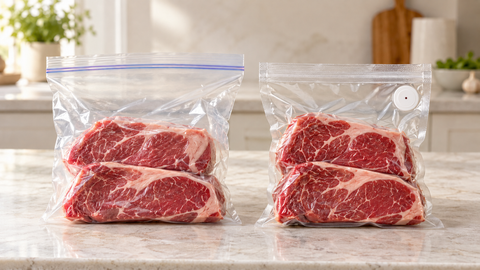
You have divided a bulk pack of meat into meal-sized portions. Now comes the storage question: should you use regular freezer bags or vacuum seal each portion?
Both can work well in a home freezer. The biggest difference is how they remove air. With a regular freezer bag, you press air out by hand before closing the zipper. Vacuum sealing uses a pump to draw air out of compatible packaging before storage.
That difference matters for food quality, especially when groceries spend more time in the freezer. Here is how the two options compare—and when each makes sense.
What Are Regular Freezer Bags?
Regular freezer bags are food-storage bags specifically labeled for freezer use. You fill the bag, gently press out as much air as possible, and close the zipper completely.
They need no additional equipment and are convenient for everyday portioning. When properly packed and sealed, freezer bags help protect food against moisture loss and air exposure. Choose freezer-rated packaging rather than assuming every zipper bag offers the same protection.
How Is Vacuum Sealing Different?
Vacuum sealing adds an air-removal step using a machine. It can remove more air than you can usually press out by hand, helping limit air contact around the food.
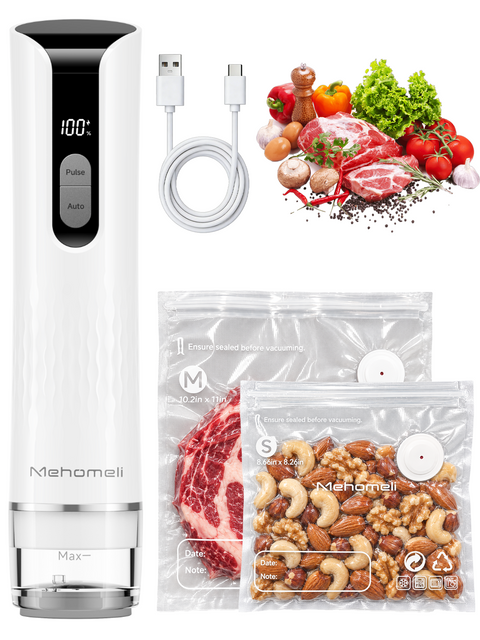
There are different systems. Many countertop sealers heat-seal compatible bags. A handheld sealer typically connects to a valve on a compatible zipper bag; you close the zipper first, then use the pump to remove air through the valve.
For frozen storage, both the packaging and the equipment must be suitable for the job. A vacuum bag is not automatically freezer-safe, microwave-safe, or suitable for cooking—check its labeling and instructions.
Vacuum Sealing vs. Freezer Bags: A Quick Comparison
| Feature | Regular freezer bags | Vacuum sealing with freezer-rated bags |
|---|---|---|
| Air removal | Press out air by hand | A pump removes air from compatible packaging |
| Equipment | No sealer needed | Requires a compatible sealer and bags |
| Protection from air exposure | Depends on how well air is removed and the bag is closed | Can reduce remaining air further; bag integrity and seal quality still matter |
| Everyday convenience | Simple for foods you access frequently | Useful for preparing individual portions for storage |
| Space | Can be flattened and stacked | Can reduce excess air volume around firm foods |
| Delicate foods | Allows looser packing | Suction may crush soft foods unless the system offers a suitable method |
| Cost | No machine purchase required | Adds equipment cost; compare bag prices and permitted reuse |
Does Vacuum Sealing Help Prevent Freezer Burn?
Freezer burn happens when frozen food loses moisture at its surface. Poor packaging and air exposure contribute to dry, tough areas and unwanted changes in quality.
Vacuum sealing can help reduce freezer burn by limiting air around the food. It is one part of good freezer storage, along with suitable packaging, a sound seal, and a steady temperature. It does not guarantee that freezer burn will never occur.
Regular freezer bags can also protect food well when you remove excess air and seal them carefully. The FDA notes that freezer burn itself is a quality issue, rather than a food-safety issue. That does not mean food is safe if it was handled or stored improperly.
When Regular Freezer Bags Make Sense
Choose regular freezer bags when you want a simple storage routine without equipment, particularly for food you rotate through regularly. They are also convenient when you repeatedly open a bag to take out a small amount.
Use a bag close to the portion size, keep the zipper clean, press out excess air, and close it fully. Label the contents and date so older portions are easier to use first.
When Vacuum Sealing May Be Worth It
Vacuum sealing may suit you if you buy groceries in bulk, prepare individual portions ahead of time, or often find dry patches on frozen food despite careful packing.
For example, you could divide meat into dinner-sized portions and vacuum pack each portion separately. This lets you take out only what you need without opening the remaining packs. Use bags approved for freezing, and protect them from sharp bones or edges according to the bag instructions.
The value depends on your habits. Consider how often you freeze food, how long it stays there, and whether the equipment and bag costs fit your budget. Neither system guarantees savings or a specific increase in storage life.
A Few Foods Need Extra Care
- Soft foods: Strong suction can flatten bread or crush delicate fruit. Use an approved gentle method or suitable container if your system supports it.
- Soups and sauces: Loose liquid can be drawn into a handheld pump. Follow the manufacturer's approved method; a freezer-safe rigid container may be more practical. Leave the required space for expansion.
- Vegetables: Many vegetables need blanching before freezing to maintain quality. Vacuum packing does not replace food-specific preparation.
- Reusable bags: Reuse only when allowed by the manufacturer, and follow cleaning instructions. Replace bags with damaged zippers, valves, or surfaces.
Food Safety Rules Stay the Same
Neither a regular freezer bag nor a vacuum sealer makes unsafe food safe. Vacuum packing does not sterilize food and does not replace refrigeration or freezing.
Keep your freezer at 0°F (-18°C) or below. Properly handled food kept continuously at that temperature remains safe, although flavor and texture can decline over time. Follow food-specific storage guidance and package instructions rather than assuming vacuum sealing adds a fixed number of months.
Label packages, freeze promptly, and use recommended thawing methods for the particular food. Follow any special directions for vacuum-packed products, including instructions to remove packaging before thawing.
Which Should You Choose?
Regular freezer bags are a practical choice for straightforward, everyday storage. Vacuum sealing adds more thorough air removal and may be useful when you frequently freeze individual portions or want to better protect food quality during storage.
You can use both: keep regular freezer bags for foods you access often and vacuum pack suitable portions you plan to leave sealed until use.
If you are considering a handheld system, explore Mehomeli handheld vacuum sealers and compatible vacuum bags. Check freezer suitability, compatibility, and care instructions on the product page before choosing.